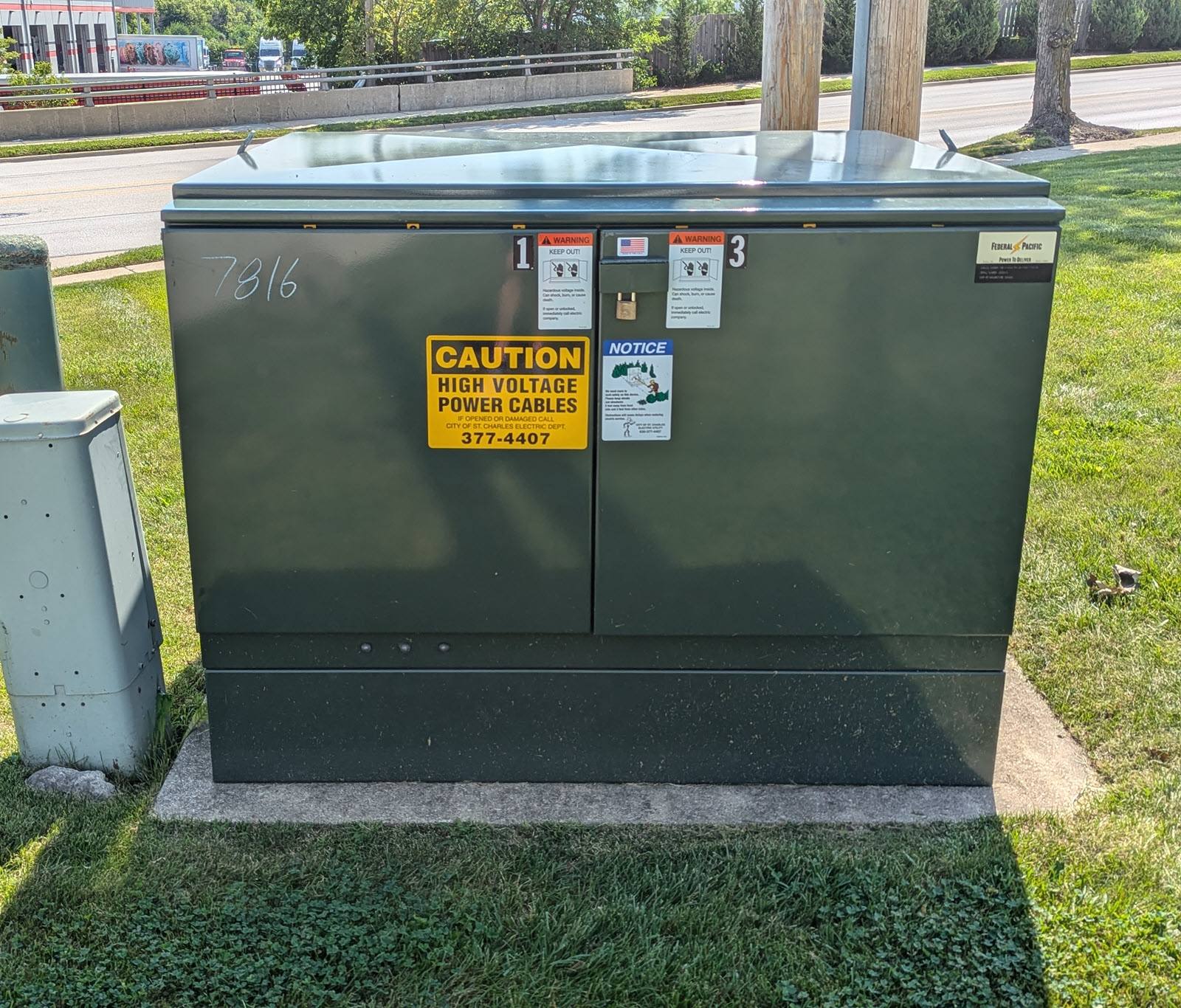
The steel enclosure is only one part of a pad-mount removal job. Underground conductors, ownership rights, lifting access, fluid documentation, and the concrete foundation can all affect whether a sale proceeds cleanly. For a property manager or contractor, the key is defining what is being sold and what remains a site obligation. A buying offer should be evaluated against a clearly documented removal scope, not an assumption that everything disappears together.
Establish ownership and authority before planning removal
A transformer sitting on your property is not necessarily yours to sell. Confirm ownership through purchase records, service agreements, asset records, or the serving utility. Utility-owned equipment and privately owned equipment require different authorization paths. Also identify whether an easement or service arrangement restricts access or changes. Do not schedule a buyer's pickup until the party responsible for the equipment has authorized its sale and the required electrical work.
Ask the appropriate local authority and serving utility what approvals apply to the planned work. Electrical disconnection, service changes, excavation, and demolition may involve separate requirements; there is no universal permit checklist for every pad-mount project. Use qualified contractors to establish the sequence and responsibility for inspections. Keep permit costs and utility coordination visible in your sale comparison instead of treating them as expenses that a transformer purchase automatically eliminates.
- Verify legal equipment ownership.
- Review service and easement terms.
- Check applicable approval requirements.
- Assign inspection responsibilities.
Define the electrical and lifting boundaries
Disconnection must address both primary and secondary circuits, possible backfeed, and the disposition of underground cables. Qualified electrical personnel should isolate the equipment, verify its status, and handle terminations under applicable procedures. Decide whether conductors will be removed, protected for reuse, or abandoned under an approved plan. A buyer needs to know when the transformer will be electrically released, not merely when the facility intends to stop using it.
The lifting plan depends on documented weight, lifting provisions, equipment condition, and the route to the loading position. A sound enclosure does not prove that lifting points are suitable, especially where corrosion or previous damage is visible. Measure gates and overhead clearance, and identify ground conditions along the access route. Crane or forklift selection belongs to the qualified removal team; seller photographs and dimensions support planning but do not replace that assessment.
- Identify every connected circuit.
- Document weight when available.
- Measure the loading route.
- Disclose damaged lifting provisions.
Treat the concrete pad as a separate scope item
Selling the transformer does not inherently include breaking out its foundation. Decide whether the pad will support replacement equipment, remain unused, or be demolished. Before cutting concrete or excavating, locate underground utilities and review the cable entry arrangement. Pad dimensions alone do not establish compatibility with a replacement transformer: conduit positions, anchoring, clearances, and foundation requirements also matter. Keep that engineering decision separate from the used unit's sale.
Inspect the surrounding area for staining, leaks, and damaged concrete without assuming that every mark indicates contamination. If the history or observed condition warrants investigation, use qualified environmental personnel to determine testing and handling requirements. Concrete, soil, transformer fluid, and electrical equipment can follow different disposal paths. Assign responsibility for each material explicitly, including who manages any unexpected findings after the transformer is lifted away from the pad.
- Specify whether the pad stays.
- Locate utilities before demolition.
- Record visible staining or damage.
- Assign unexpected-condition responsibilities.
Separate a purchase offer from disposal obligations
For a buying evaluation, supply the transformer nameplate, overall photographs, condition history, and available fluid records. Include compartment photographs only when qualified personnel have established safe access. Document missing parts, leaks, and previous repairs. Texas Electrical Transformer Buyers considers used and surplus equipment for purchase; offers are unit-specific and based on inspection. An intact, documented unit and a partially dismantled enclosure are not equivalent purchase opportunities.
Before accepting an offer, put the removal boundaries in writing: electrical release, lifting, loading, freight, fluid handling, pad work, and site cleanup. Clarify who retains waste paperwork and who bears costs if the unit's condition differs from the description. Your useful comparison is the net result after these obligations, not the offer alone. Request a purchase evaluation before unnecessary dismantling, while keeping all required safety and environmental work on schedule.
- Provide identification and fluid records.
- List missing or damaged parts.
- Define loading and freight duties.
- Compare proceeds after site costs.
Common questions
Does selling a pad-mount transformer include removing the concrete pad?
Not automatically. The equipment purchase and foundation demolition are separate scope items unless the parties expressly agree otherwise. State whether the pad must remain for replacement equipment or be removed, and identify responsibility for underground utilities, concrete disposal, and any environmental investigation. Confirm the arrangement before mobilizing electrical contractors or lifting equipment.
What permits are needed to remove a privately owned pad-mount transformer?
Requirements depend on the jurisdiction and work involved. Electrical disconnection, changes to service, excavation, and pad demolition may require different approvals or inspections. Check with the applicable authority and serving utility, using your qualified contractor's work plan. Private ownership establishes potential selling authority, but it does not waive electrical, environmental, or construction requirements.
Reviewed by the Texas Electrical Transformer Buyers buying desk · Last updated November 13, 2026