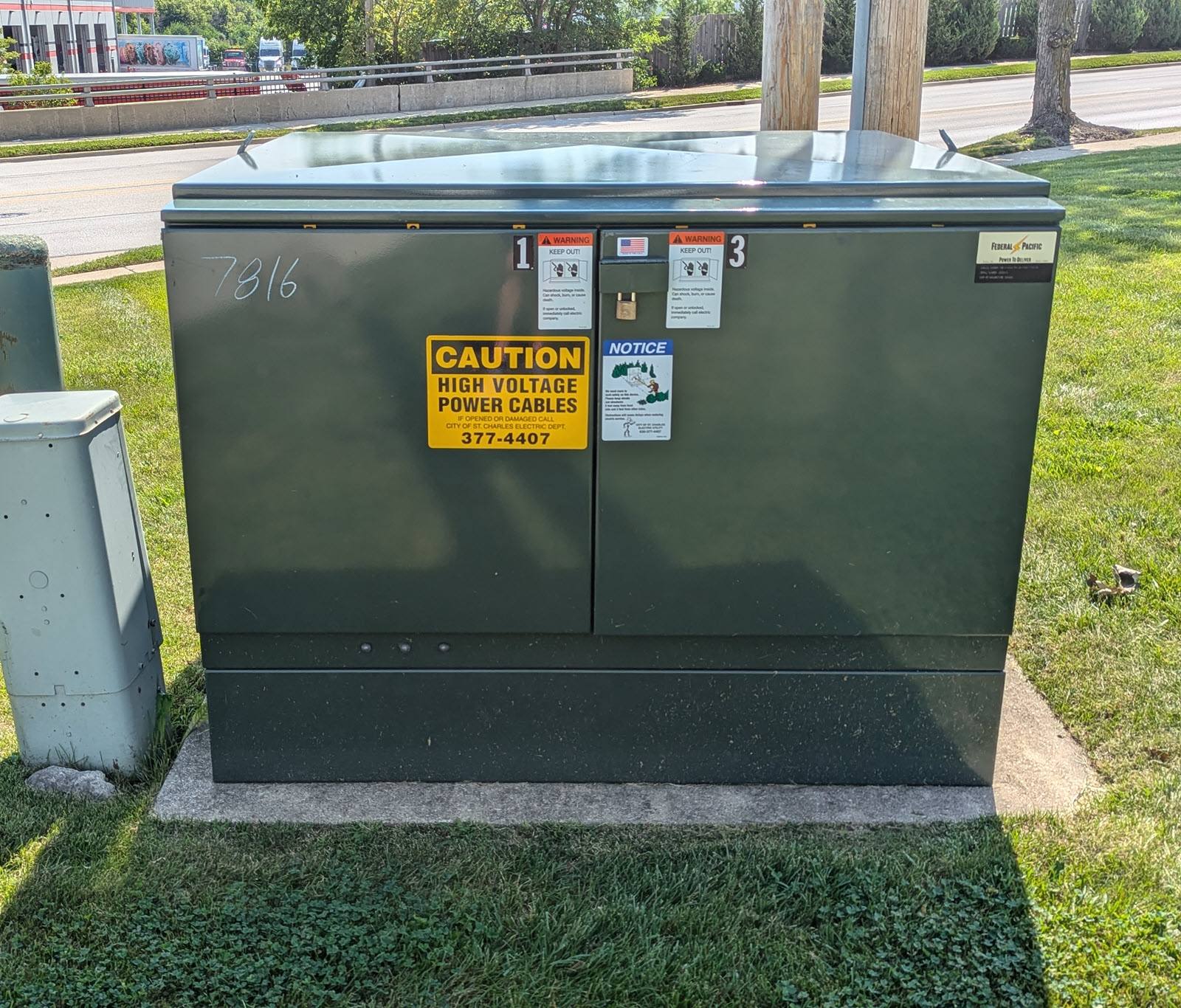
Removing a pad-mounted transformer involves more than lifting a cabinet off concrete. Cable terminations, equipment ownership, oil condition and loading access all need attention before a sale can proceed. Texas Electrical Transformer Buyers buys used and surplus units from owners and authorized managers. If you are arranging pad mount transformer recycling Dallas, send the nameplate and site photographs first so we can evaluate the equipment and the practical requirements for taking it out of service.
Pad-mounted distribution transformers commonly serve commercial properties, plants, hospitals, campuses and data centers. Typical units are 15 kV class, range from 15 to 2,500 kVA and use single-phase or three-phase configurations. Dead-front designs place insulated primary connections inside a tamper-resistant cabinet rather than exposing energized primary terminals. For an owner selling retired equipment, the most important distinctions are the actual voltage ratings, connection arrangement, cabinet condition and whether safe cable disconnection has already been completed.
What we buy: single-phase and three-phase pad-mounted units
We consider surplus pad-mounted transformers, units removed during electrical upgrades and retired equipment available for reuse assessment or recycling. Tell us whether the cabinet and tank remain together and whether primary bushings, secondary terminals, doors and internal barriers are intact. Photographs should show the nameplate, exterior and accessible compartments only when qualified personnel have established safe access. A missing door, damaged terminal compartment or leaking tank changes the condition assessment even if the nameplate ratings appear desirable.
Common manufacturers include Eaton, Howard, ABB and GE, but the exact model and electrical configuration matter more than the logo. Record kVA, primary voltage, secondary voltage, phase, frequency and winding connection. Typical secondary arrangements can include 120/240 V single-phase, 208Y/120 V or 480Y/277 V three-phase service, but use the actual nameplate rather than assumptions. Identify loop-feed or radial-feed construction and any installed switches or fuses because these features affect completeness and potential reuse.
- Single-phase and three-phase distribution units
- Loop-feed and radial-feed configurations
- Unused surplus and retired service equipment
- Complete cabinets or disclosed damaged assemblies
| Typical capacity | Voltage class | Common applications |
|---|---|---|
| 15 to 2,500 kVA | 15 kV to 35 kV | Commercial, institutional and industrial pads |
Ranges are typical only. Send the nameplate for the actual ratings of your unit.
How we inspect and value pad-mounted transformers
Our inspection checks the tank, cabinet, terminal compartments and available electrical records. We look for corrosion near the base, oil leaks, damaged bushings, broken door hardware and signs of overheating at secondary connections. Dead-front construction does not mean the equipment is safe to open or touch while energized. Insulated connectors, bushing wells and inserts need condition checks by qualified personnel, especially when the unit has experienced flooding, impact damage or improper cable handling during an earlier removal.
The buying review weighs kVA, voltage configuration, phase, completeness and condition against the cost of disconnection and handling. Oil records and appropriate electrical testing can help distinguish a serviceable takeout from a transformer with an internal fault. Unused equipment still requires review of storage conditions, seals and accessories. Offers are unit-specific and based on inspection; cabinet appearance alone does not establish value. A reusable electrical configuration may offer different recovery prospects than a heavily corroded unit with compromised insulation.
- Tank leakage and base corrosion
- Primary connector and bushing condition
- Secondary terminal heat damage
- Ratings, completeness and handling costs
Failure modes, oil records and proof of ownership
Explain why the transformer is available and whether it was operating normally before disconnection. Blown fuses, repeated protective-device operations, low oil level and heat-damaged terminals each point to different questions. A failed fuse is not enough to diagnose an internal winding problem, while flood exposure may affect both the cable compartment and insulation condition. Include maintenance notes and any testing after the event. Accurate failure history prevents a routine replacement from being confused with an unresolved equipment fault.
Confirm that you own the transformer or have authority to sell it. Equipment on private property may still belong to a utility or another party, so location alone does not establish ownership. Provide available oil analysis and PCB records, especially for older equipment with incomplete service history. Do not identify the insulating fluid by appearance or assume its classification from the cabinet age. If the transformer has been drained, state when, why and where the fluid was handled.
- Reason for retirement and fault history
- Flooding or low-oil disclosures
- Ownership or sale authorization
- Oil analysis and PCB documentation
Cable disconnection, pad access and removal planning
Qualified electrical personnel must isolate the transformer, verify the safe condition and address primary and secondary connections before lifting begins. Primary elbows and underground cables cannot simply be pulled aside without considering their ratings, condition and remaining service requirements. Identify whether cables will stay on site, be rerouted or be removed as part of another project. Grounding connections, conduits and cabinet anchorage also need attention so the tank is not moved while still attached to site infrastructure.
Photograph the route from the concrete pad to a loading location, including gates, fences, bollards and overhead obstacles. Restricted access may require temporary removal of barriers or a different lifting arrangement. Provide dimensions and documented weight when available rather than estimating from kVA alone. Clarify whether the concrete pad remains and whether oil containment or cleanup is required. Agreeing on these boundaries before removal helps separate the transformer purchase from other demolition, electrical work and site-restoration responsibilities.
- Verified isolation and cable work
- Gate, fence and bollard clearance
- Lifting access and documented weight
- Pad, containment and cleanup boundaries
Common questions
Can I sell a transformer located on my property?
Only if you own it or are authorized to sell it. Some pad-mounted equipment on private property belongs to the serving utility or another equipment owner. Confirm ownership through purchase records, asset files or the responsible party before arranging a transaction. We need that issue resolved rather than treating the location as proof of sale authority.
Do you consider pad-mounted units with leaking oil?
We can review a leaking unit when the condition is fully disclosed. Send photographs and available records describing the leak, oil level and any electrical problems. Preventing further release and maintaining site safety are separate immediate responsibilities. The extent of leakage, insulation condition and handling requirements affect whether the purchase is assessed for reuse or recycling.
What is the difference between loop-feed and radial-feed equipment?
Loop-feed equipment generally provides two primary connection points per phase to support incoming and outgoing distribution cables. Radial-feed equipment generally has one primary connection point per phase. These arrangements affect cable work and equipment suitability. Photograph the connection layout only under safe, authorized access, and provide the manufacturer's configuration information when available.
Should our crew cut the cables before you evaluate the transformer?
Do not cut or disconnect cables simply to prepare photographs or request a buying review. Electrical isolation and termination work must be planned by qualified personnel with responsibility for the system. Initial evaluation can begin with the nameplate, exterior pictures and available records. Identify who will perform disconnection and what cables must remain for the site's future service.
Can a transformer still be evaluated if bollards block removal?
Yes, but show the obstruction and available clearances in your site photos. Bollards, fences or gates may need temporary removal, or lifting equipment may need a different position. These conditions influence removal cost and feasibility. Clarify who is authorized to alter the barriers and whether restoration is required before a removal plan is agreed.
Reviewed by the Texas Electrical Transformer Buyers buying desk · Last updated November 13, 2026