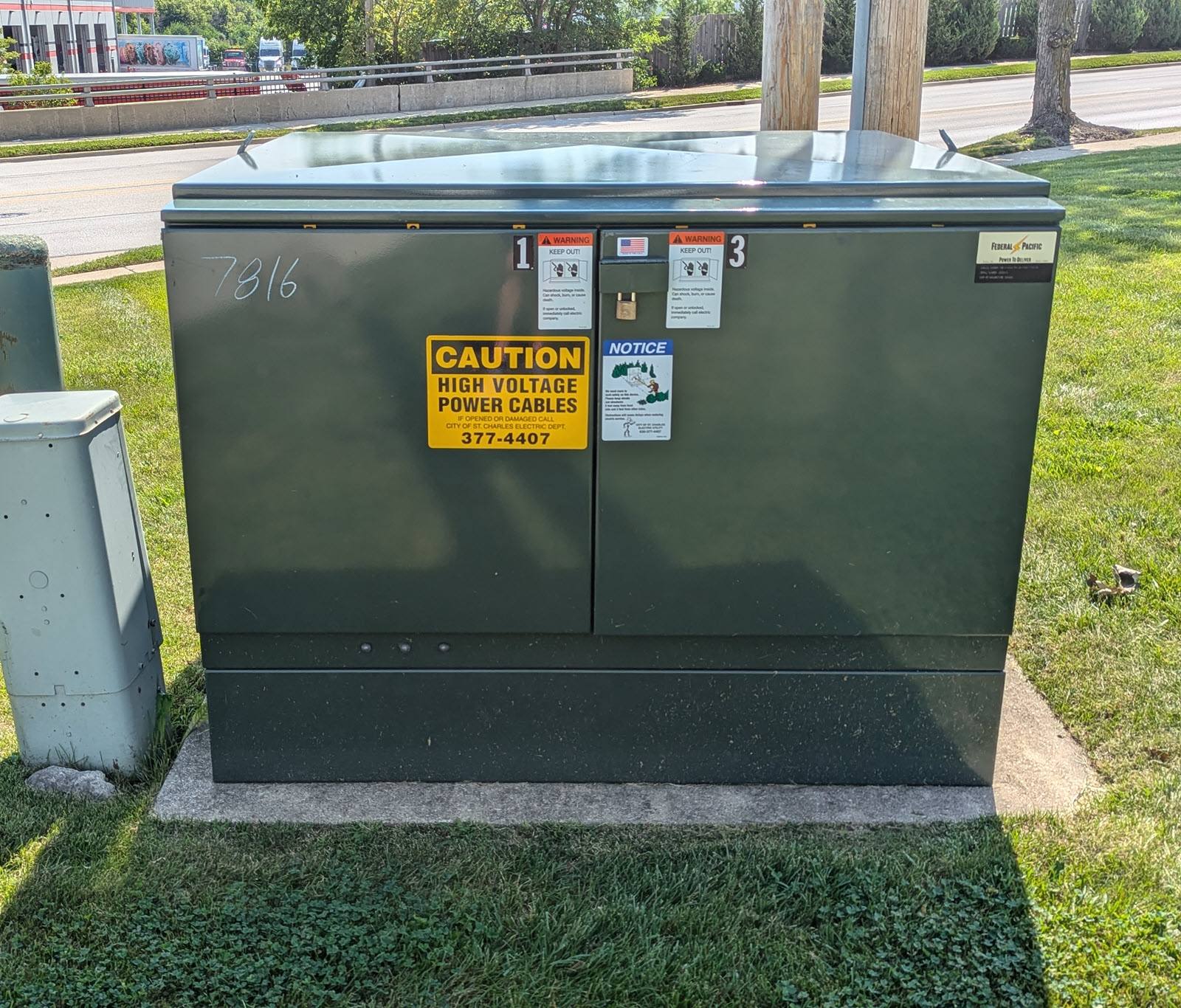
A pad-mounted transformer left behind after a service upgrade needs a buying review that covers the cabinet, electrical ratings, and removal path. We purchase surplus and used units from Pasadena owners. In Harris County’s Gulf Coast setting, the Ship Channel refineries and chemical plants and the heavy industrial corridor along Highway 225 provide context for demanding distribution applications and controlled site access.
Show the Ratings and Compartment Configuration
Pad-mounted distribution transformers commonly cover 15 to 2,500 kVA, often in the 15 kV class, with single-phase or three-phase configurations. Dead-front, tamper-resistant designs place connections inside a secured cabinet on a concrete pad. Send the nameplate and exterior photographs first. Connection details should only be documented after qualified personnel establish safe access; opening a cabinet can expose serious electrical hazards.
These transformers serve commercial properties, plants, hospitals, campuses, and data centers, but application alone does not establish value. We need primary and secondary voltages, capacity, phase, and the connection configuration. Identify installed switches, fuses, and other accessories from available records. If parts have already been removed, specify what remains so the evaluation reflects the actual equipment being offered for sale.
bullets
- Electrical ratings
- Cabinet layout
- Connection configuration
- Remaining accessories
Disclose Cabinet Damage and Service History
The enclosure is part of the review, not merely packaging. Report damaged doors, failed locks, corroded panels, missing barriers, and evidence of water entry. Describe leaks, bushing damage, and known operating issues separately from cabinet wear. Clear photographs help distinguish repairable exterior problems from conditions that may affect the transformer’s electrical integrity, fluid containment, or safe handling during an eventual move.
Explain whether the unit was replaced for increased demand, a voltage change, or a failure. Include available maintenance records, electrical test reports, and fluid documentation for liquid-filled equipment. We do not treat an unverified statement of working condition as a substitute for inspection. Each cash offer is developed for the particular transformer, considering its specifications, completeness, documented history, and observed condition.
- Door condition
- Leak evidence
- Replacement reason
- Maintenance records
Account for Cables, Bollards, and Pad Access
Disconnecting a pad-mounted unit involves cable termination work, not just lifting it off concrete. Establish who will isolate the supply, disconnect conductors, and make the remaining installation safe. Tell us whether cables enter from below and whether cable compartments are accessible. Do not cut connections or pull the transformer while conductors remain attached, even if the upstream supply is believed to be off.
At a Pasadena industrial property, the route from the pad to a truck may be constrained by fencing, bollards, neighboring equipment, or limited turning space. Provide dimensions, documented weight, and photographs of the approach. Identify obstacles that require authorized removal and whether the pad must remain intact. Purchasing and handling arrangements should reflect those actual conditions rather than assuming unrestricted forklift or crane access.
- Cable disconnection
- Bollard clearance
- Fence access
- Loading approach
Common questions
Can I sell a pad-mounted transformer before the cables are disconnected?
You can begin the evaluation while it remains connected. Supply safely obtained exterior photographs, the nameplate, and the planned outage or removal status. Actual handling requires qualified isolation and cable disconnection. The agreement should identify responsibility for termination work, site safety, lifting, and loading rather than treating those tasks as automatically included in the purchase.
Do damaged cabinet doors rule out a purchase?
Not automatically. Send photographs showing the damage, hinges, locks, barriers, and surrounding cabinet surfaces. Explain whether the damage allowed water entry or exposed internal components. Exterior repair needs are different from compromised insulation or damaged connections, so the review must cover both. Any offer remains specific to the equipment and subject to inspection.
Reviewed by the Texas Electrical Transformer Buyers buying desk · Last updated November 13, 2026