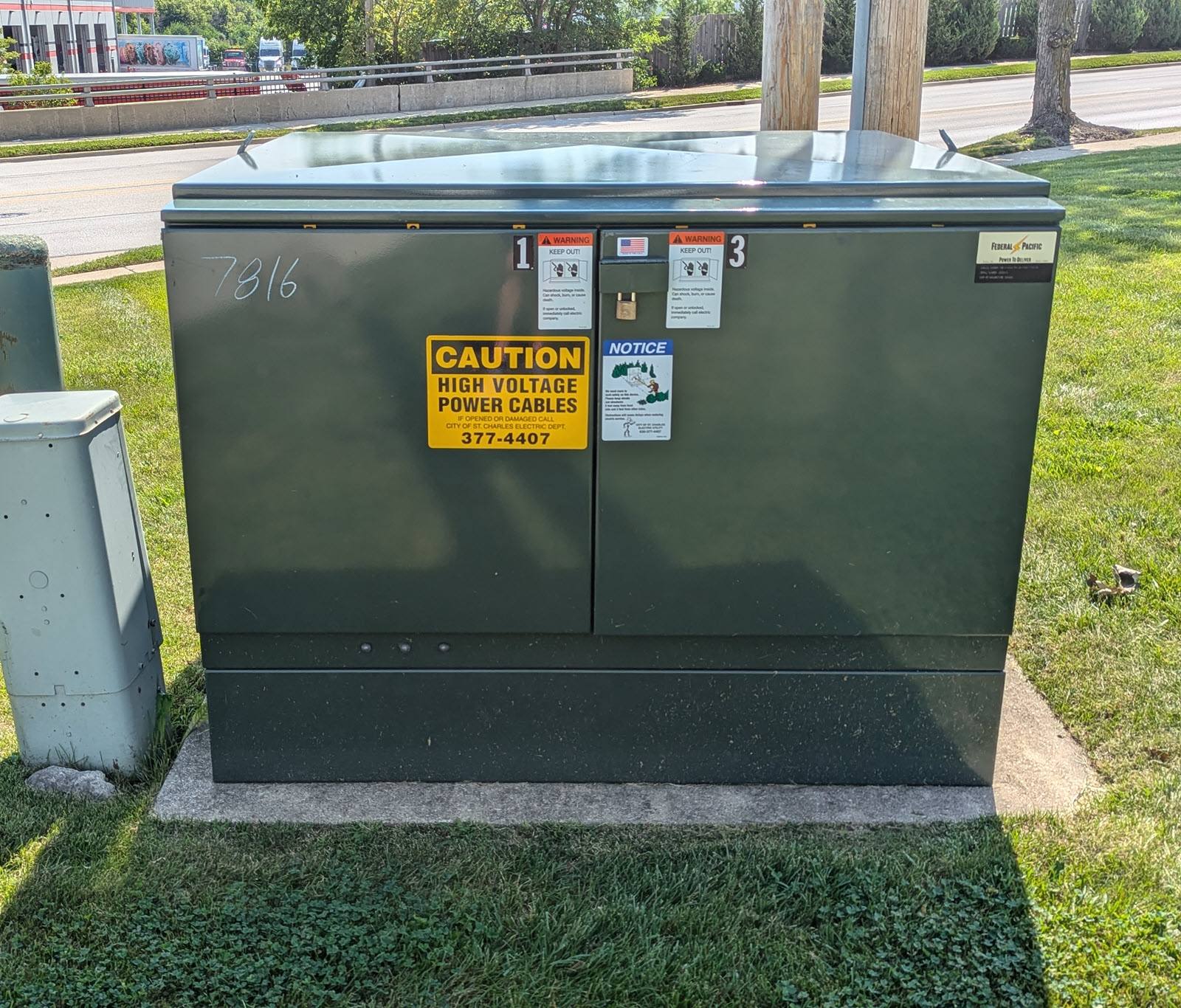
A distribution change at an El Paso manufacturing or logistics property can leave a pad-mounted transformer that no longer matches the site's needs. Selling it requires separating the electrical equipment from the cables, pad and access restrictions around it. Texas Electrical Transformer Buyers buys used and surplus units for cash, evaluating configuration and condition alongside the practical details of removal.
Describe the Transformer, Not Just the Cabinet
These distribution transformers typically use dead-front connections inside tamper-resistant cabinets mounted on concrete pads. Common equipment is 15 kV class, with capacities from 15 to 2,500 kVA and either single-phase or three-phase construction. Send a readable nameplate showing primary and secondary ratings. Cabinet size alone does not establish capacity, and an application description cannot replace the electrical data needed to evaluate the particular unit.
El Paso's maquiladora manufacturing and border logistics context makes the former load worth documenting, especially when equipment is retired during production or building changes. State whether the transformer served process equipment, general building loads or another known application. Include the operating status and reason for replacement. Photographs should show doors, hinges and exterior damage, while any energized compartments remain closed during the initial information gathering.
- Nameplate
- Voltages
- Application
- Cabinet
Account for Cables, Barriers and Loading Access
A pad-mounted unit is not ready to move merely because the downstream equipment has been removed. Qualified electrical personnel must handle isolation and cable termination work. Explain whether the transformer is energized, disconnected or already lifted from its pad. Underground cable routing and the remaining terminations affect the removal sequence, so those conditions should be established before anyone commits to physical handling or loading work.
Show fences, protective bollards and the route available for lifting equipment. At a logistics property, vehicle circulation may constrain access even when the pad itself is unobstructed. Manufacturing or refining-related sites may impose additional work coordination requirements. Report the restrictions that apply to your actual property rather than assuming them from its industry. Any barrier removal or access preparation needs an assigned responsibility in the agreed scope.
- Cables
- Barriers
- Routing
- Loading
Support the Offer With Condition and Sale Authority
Supply available maintenance records, test results and oil information, together with any known leaks or electrical faults. Tell us when the unit last carried load and how it has been stored if already removed. Missing parts, damaged bushings and cabinet corrosion should be documented separately. Our purchase evaluation combines these details with inspection findings; neither the kVA rating nor a claim of recent operation guarantees an offer.
Confirm that the proposed seller owns the transformer and can authorize its release. El Paso includes Fort Bliss as well as privately controlled industrial properties, but location alone does not establish who may sell equipment. List the components included in the transaction and identify any third-party approvals required. Cash offers are unit-specific and based on inspection, with disconnection and removal responsibilities clarified before the sale is completed.
- History
- Completeness
- Authority
- Responsibilities
Common questions
Can a transformer behind protective bollards still be evaluated?
Yes. Send pictures showing the transformer, bollard spacing and available approach from outside any energized compartment. Describe whether barriers can be removed and who controls that work. Access restrictions affect the removal plan, not just the equipment review. Electrical disconnection, lifting and any barrier work should have clearly assigned responsibilities before removal proceeds.
What should I disclose if the unit was replaced after a production change?
Explain the previous load, the reason the new arrangement required replacement and whether the transformer was operating normally when disconnected. Include nameplate ratings and available tests or maintenance records. A production change does not prove the transformer is defective or serviceable. We evaluate its actual condition and configuration, with an offer determined for that unit after inspection.
Reviewed by the Texas Electrical Transformer Buyers buying desk · Last updated November 13, 2026