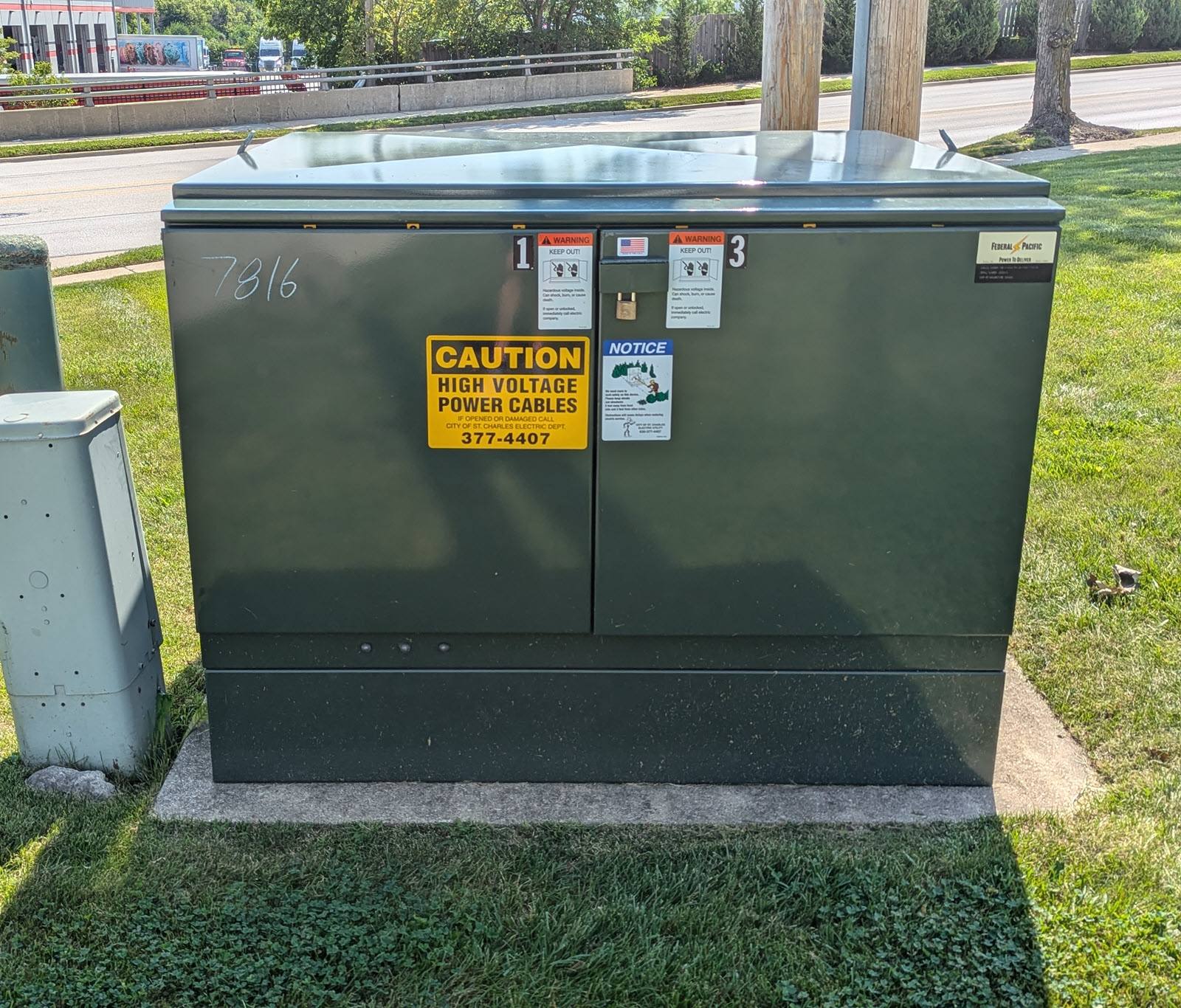
To sell pad-mounted transformers in Odessa, Texas, provide a clear account of what is installed and what will be included in the sale. Texas Electrical Transformer Buyers buys surplus and used equipment for cash. Odessa's Ector County setting includes Permian Basin oil and gas, petrochemical, and oilfield services activity, where equipment replacement can leave distribution units available with different electrical ratings, service histories, and access requirements.
Define the Unit Being Offered
A pad-mounted transformer is a dead-front distribution unit housed in a tamper-resistant cabinet on a concrete pad. Typical ratings span 15 to 2,500 kVA, usually in the 15 kV class, with single-phase and three-phase designs. Submit the complete nameplate rather than only the capacity. Primary voltage, secondary voltage, and connection details help establish whether the transformer can be evaluated for reuse in another compatible application.
Describe the equipment's role before it became surplus, whether it supplied an oilfield services building or supported plant distribution. Do not include connected switchgear or other equipment unless it is part of the proposed sale. Exterior photos should show the cabinet, pad, and surrounding installation. Use existing electrical records for internal connection details when the transformer remains energized or access to its compartments is restricted.
- Complete nameplate
- Primary voltage
- Secondary voltage
- Included equipment
Explain Condition and the Reason for Retirement
A distribution upgrade, building change, or equipment failure can each put a transformer out of service, but they create different inspection questions. Explain why your unit is available and when it last operated. Supply maintenance records, available tests, and known repair details. For equipment associated with petrochemical or oilfield services operations, report any relevant exposure or operating issues rather than assuming the site's industry establishes condition.
Photograph rust, impact damage, staining, and suspected leaks closely enough to show their locations. Note whether doors close securely and whether required components are missing. If the unit has been stored after disconnection, describe protection from weather and physical damage. The offer is specific to that transformer and based on inspection; neither a recent exterior repaint nor a large kVA rating substitutes for evidence of condition.
- Retirement reason
- Last operation
- Visible damage
- Maintenance records
Coordinate Electrical Work and Site Access
Cable terminations must be handled by qualified personnel as part of the site's isolation and removal procedures. State whether the transformer has been electrically released or still requires a scheduled outage. Identify who is responsible for disconnecting conductors and making the remaining installation safe. The purchase review should not assume that those tasks are included simply because the owner describes the equipment as surplus or inactive.
Access around the pad determines how lifting and loading can be planned. Show fences, bollards, nearby structures, and the approach from the truck position. If a barrier must be removed, explain whether that work is authorized and included in the removal scope. These details let us assess the available transformer without treating an enclosed plant location as equivalent to a disconnected unit in an open yard.
- Outage requirements
- Termination work
- Fence restrictions
- Loading approach
Common questions
What should I send if the cabinet cannot be opened safely?
Send exterior photographs, any safely visible nameplate information, and existing equipment records. State that compartment access is restricted. We can use those materials for an initial review and identify what remains to be verified. Do not bypass locks or open energized compartments to obtain details for a sale inquiry.
Can a fenced-in pad-mounted transformer still be considered?
Yes, but the enclosure and removal route need to be documented. Provide gate dimensions, photographs of the fence and bollards, and information about any authorized barrier removal. Restricted access does not automatically prevent a purchase, although it affects the lifting plan and the responsibilities that must be settled before removal.
Reviewed by the Texas Electrical Transformer Buyers buying desk · Last updated November 13, 2026